
The Invention of an Icon
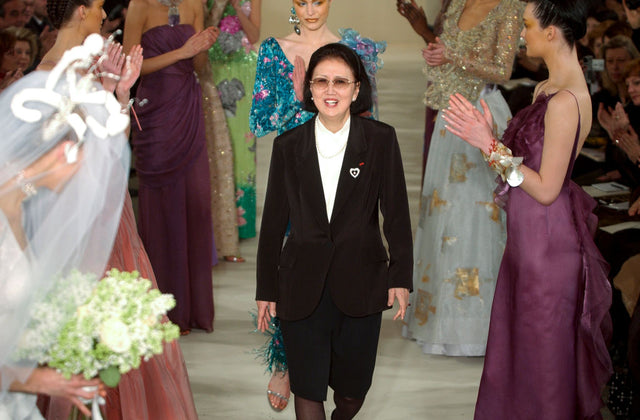
“The butterfly is my muse.” Hanae Mori
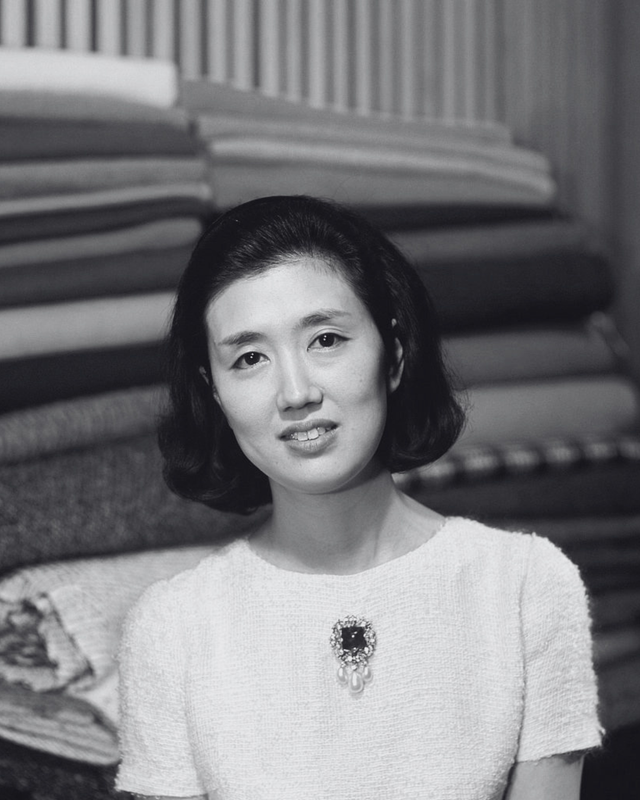
Tokyo - Birth of a Vision
Avant de devenir un symbole international d’élégance, Hanae Mori était une jeune femme du Japon d’après-guerre refusant de se laisser enfermer dans les conventions.
Née dans la préfecture de Shimane et diplômée en littérature japonaise, elle racontait souvent avoir été la seule enfant de son entourage à s’habiller à l’occidentale. Très tôt, elle comprend que le vêtement est une façon d'affirmer son identité.
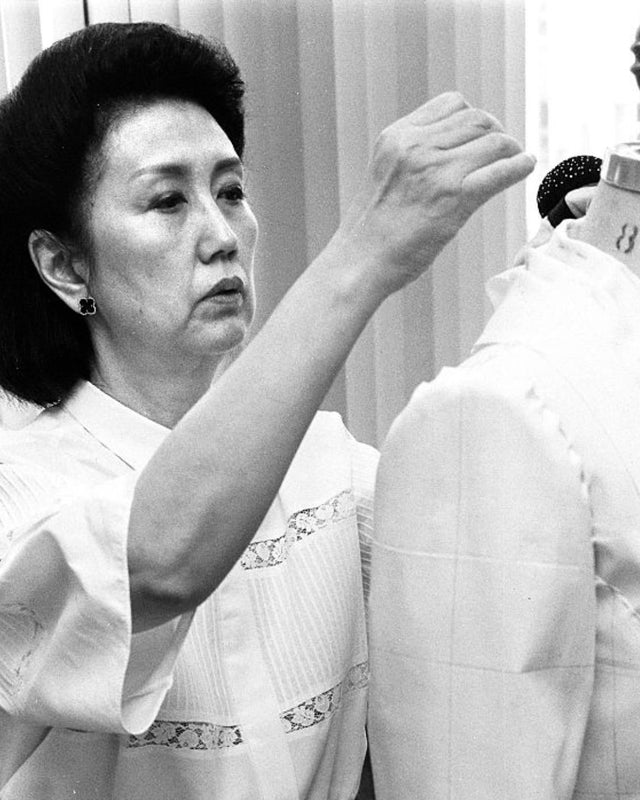
Sa carrière débute dans un minuscule atelier face à un cinéma de Tokyo. Elle y crée des costumes pour la nouvelle vague du cinéma japonais et signera près d’une centaine de films. Ces années fondatrices forgent sa précision technique, son sens de la narration et sa conviction que le vêtement révèle la personnalité.
En 1961, dans le magazine Soen, elle propose une nouvelle figure féminine : le « Vital Type ». Une femme vive, indépendante, intellectuellement engagée. Une femme qui travaille, qui s’investit, qui choisit sa voie.
Ce n’est pas seulement une idée. C’est déjà sa propre trajectoire qu'elle dessine.
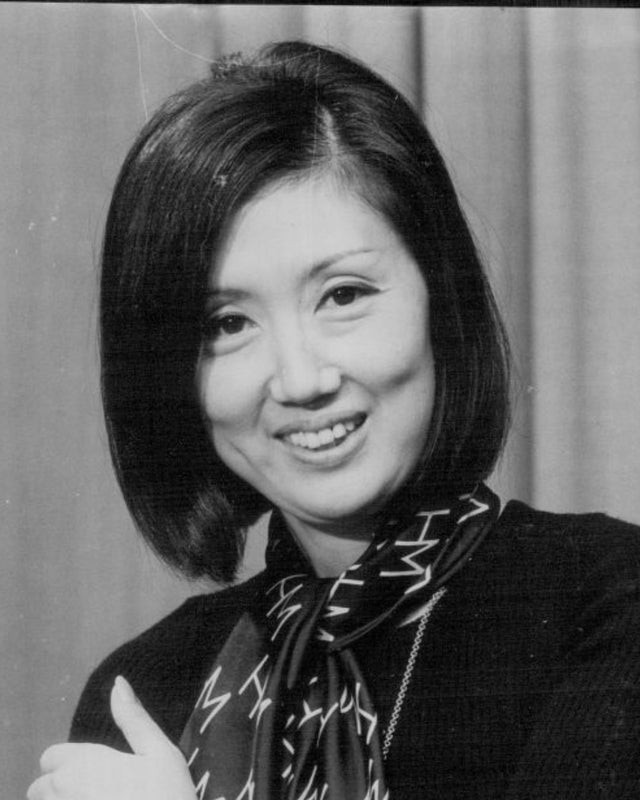
New York - East Meets West
In 1965, Hanae Mori debuted her first collection in New York. Titled Miyabiyaka, it marked a turning point, not only in her career, but in global fashion history.
The American press described it as “East Meets West.” Flowing silks, refined prints, and Japanese sensibility met Western structure and modernity. Buyers responded immediately. High-end department stores began carrying her designs, and her name quickly circulated within the New York fashion establishment.
Her work caught the attention of legendary Vogue editor Diana Vreeland, who recognized the singularity of her vision and introduced her aesthetic to an international audience through Vogue. Photographed by Richard Avedon, her creations appeared in striking editorial spreads that defined an era.
Today, several of her pieces are preserved in the collections of the Metropolitan Museum of Art - a testament to the cultural significance of her American years.
New York did more than embrace her talent. It revealed her global destiny.
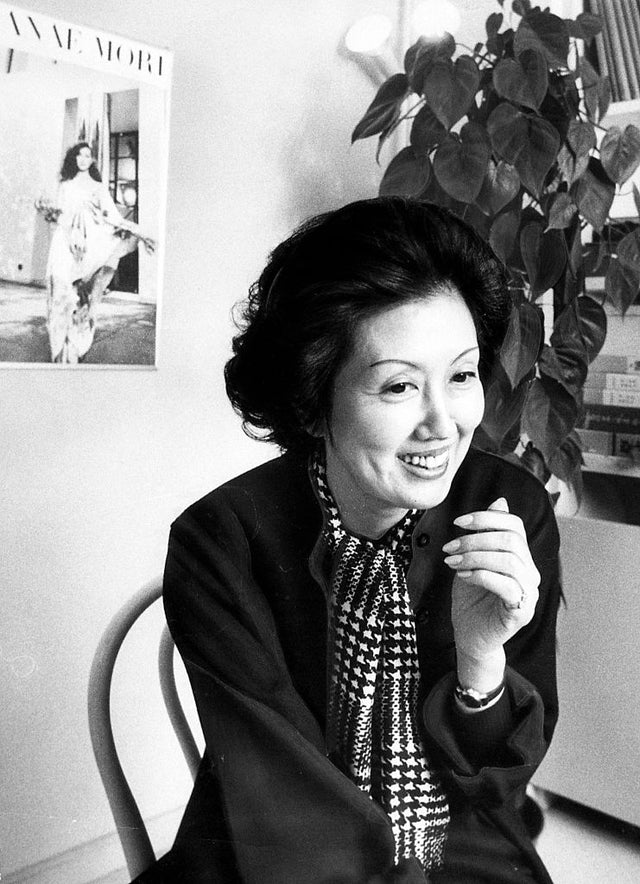
Paris - Couture Milestone
Paris, represented the ultimate frontier.
After a decisive encounter with Coco Chanel, who encouraged her to pursue haute couture, Hanae Mori set her sights on the French capital. In 1977, she became the first Japanese - and first Asian - designer admitted as an official member of the Chambre Syndicale de la Haute Couture.
Her collections brought a new language to Paris: luminous silks, intricate embroidery, masterful folding techniques, and an unmistakable motif - the butterfly.
The butterfly became her emblem. A symbol of transformation, femininity, and freedom. International clients, from Grace Kelly to Empress Masako of Japan, wore her creations. The press affectionately named her “Madame Butterfly.”
For twenty-seven years, from her debut couture collection to her final Paris show in 2004, she expanded the vocabulary of haute couture, blending Japanese aesthetics with Parisian craftsmanship at the highest level.
Beyond Fashion - A Pioneer
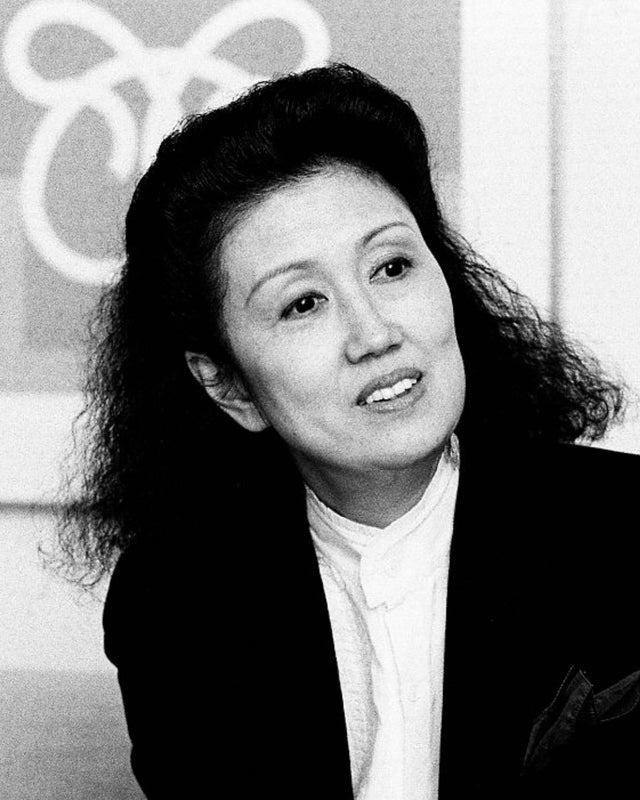
Hanae Mori was never solely a designer. She was a cultural architect.
In Japan, she launched fashion publications, introduced international industry media, and helped shape modern fashion communication. She built a house that was both creative and entrepreneurial - rare for a woman of her generation.
Her career embodied the “Vital Type” she had envisioned decades earlier: artist, businesswoman, wife, mother, and above all, a woman who defined her own path.
Long before conversations about female empowerment became mainstream, she lived them.
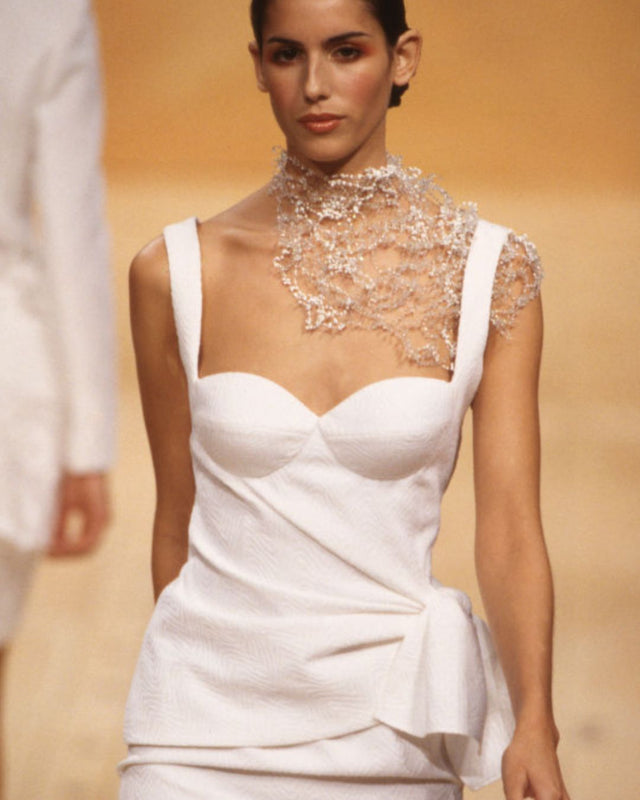
Paris Fashion Week Spring/Summer 1998
Runway - Ready To Wear
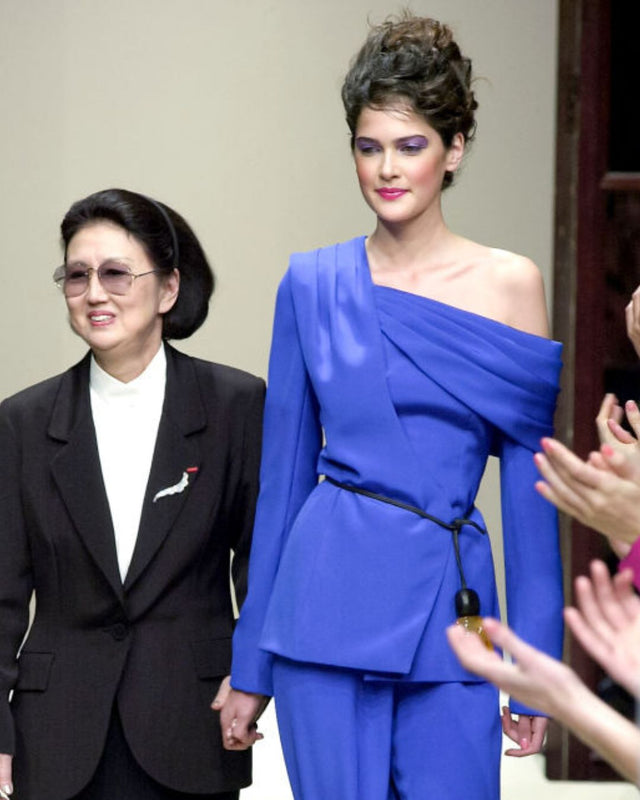
Paris Haute Couture Fashion Week Spring/Summer 2000
Runway - Ready To Wear
A Centennial Legacy
In 2026, Tokyo celebrates the centenary of Hanae Mori’s birth with a major retrospective exhibition retracing her extraordinary journey across three capitals: Tokyo, New York, and Paris.
Through nearly 400 haute couture creations, archival documents, and previously unseen works - including garments from the collection of the Metropolitan Museum of Art shown in Japan for the first time - the exhibition reveals the full scope of her artistry and ambition.
It is more than a tribute. It is the recognition of a woman who transformed fashion into a dialogue between cultures.
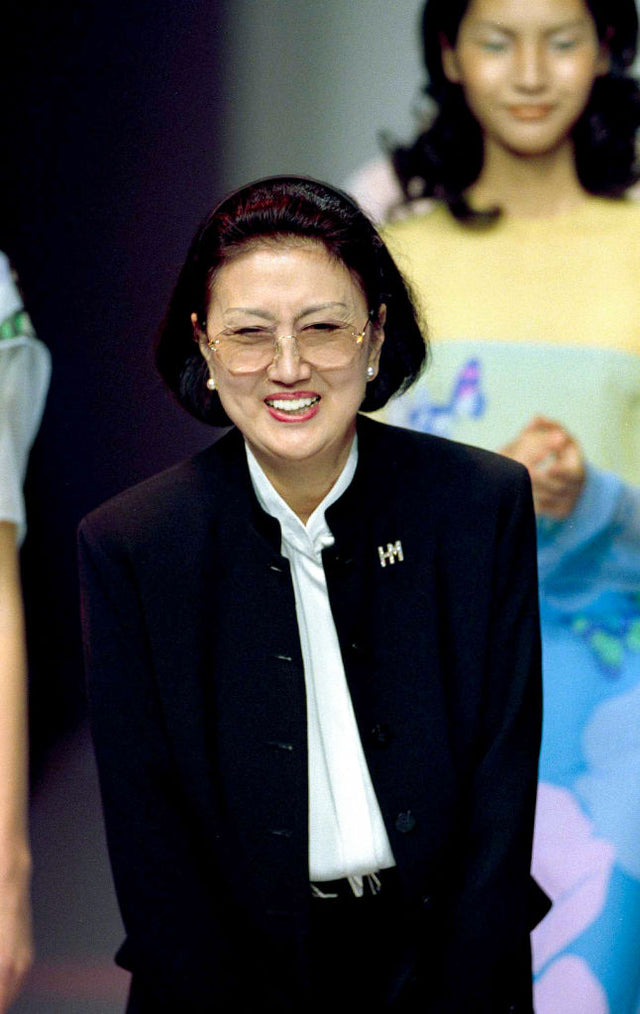
A Timeless Icon
From a small atelier in Tokyo to the salons of Parisian haute couture, through the vibrant energy of New York, Hanae Mori built far more than a fashion house. She created a bridge between worlds.
Her legacy lives on in every butterfly - a symbol of movement, courage, and transformation.
This vision naturally extended into the world of fragrance.
Like her couture creations, Hanae Mori fragrances express a dialogue between East and West, delicacy and strength.An icon is not born in a single city. It is shaped by the world, and leaves behind an unforgettable trail.